
## blog — cat confidential-job-search-senior-engineers.md
Moving in January? How to run a quiet job search while you're still employed
· BE Consultancy Group
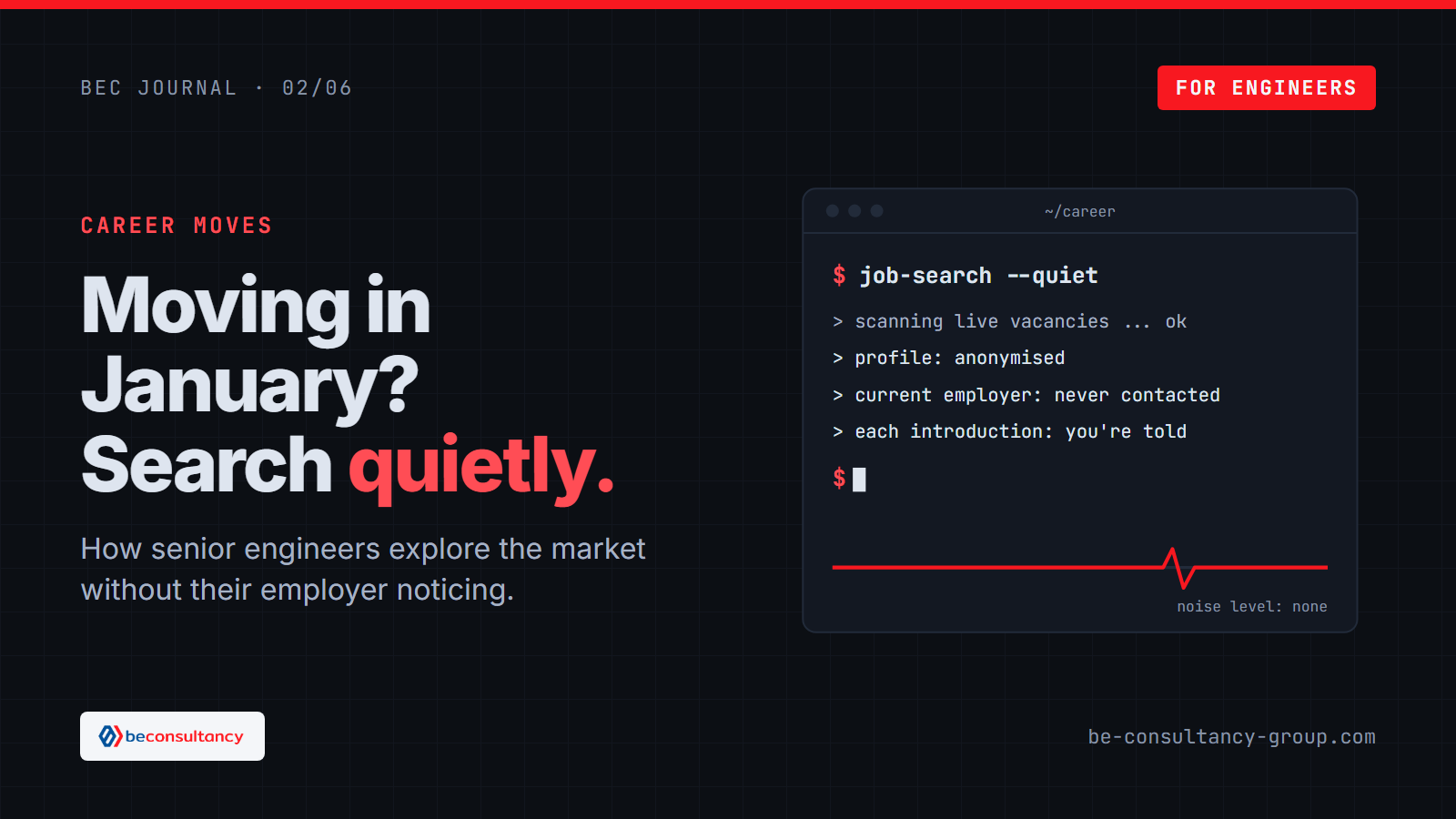
If you're a senior engineer, the end of the year is when the question usually comes back: is this still the right place for me? Maybe the year-end review didn't match the year you had. Maybe the interesting project ended and the next one looks like maintenance. Or maybe nothing is wrong at all and you're simply curious what you're worth.
Whatever the reason, most experienced engineers want the same thing: to explore without anyone at work noticing. Here's how to do that properly.
Why "quiet" matters more when you're senior
A junior developer looking around is normal. A senior engineer looking around is a signal. Managers start wondering about succession, about the project you're leading, about whether to include you in next year's plans. Even if you decide to stay, a search that leaks can change how you're seen.
That's why the usual tactics, updating your LinkedIn headline to "open to work", uploading your CV to job boards, applying to a dozen roles, are a poor fit at your level. They're loud, and you can't take them back.
You can look at the whole market without the market looking at you.
Step 1: Be clear about what would make you move
Before you talk to anyone, write down three lists:
- Must-haves. The things a new role needs to have before you'd seriously consider it: the kind of work, the level of ownership, a salary or day-rate floor, how many days in an office, etc.
- Nice-to-haves. Things that would tip the balance between two good options.
- Deal-breakers. Companies, industries or working patterns you will not consider.
This takes twenty minutes and saves you weeks. It also makes every conversation with a recruiter shorter and more useful.
Step 2: Protect your current employer relationship
A few rules that sound obvious but are broken all the time:
- Don't use your work laptop, work email or work phone for anything related to your search.
- Don't take calls about other roles in the office. Book interviews early in the morning, at lunch or after hours, and ask companies to work around your schedule. Good ones will.
- Don't change your public profiles suddenly. If you want to update your LinkedIn, do it gradually and without "open to work" banners that your colleagues can see.
- Keep doing excellent work. Your reputation travels further than your CV.
Step 3: Decide who gets to see your CV
This is where most quiet searches leak. Every time you send your CV to an agency, you lose control of where it goes next. It can end up at a company that works with your current employer, or at your current employer itself.
Ask anyone you share your CV with two questions:
- Will my profile be anonymised before you show it to a company?
- Will you tell me every time you introduce me, and can I stop an introduction?
If the answer to either is vague, keep your CV to yourself.
Step 4: Let opportunities come to you
The most efficient search for a senior engineer isn't applying. It's being represented.
At BE Consultancy Group we start from you, not from a vacancy. You sign up once and have a real conversation with a senior IT recruiter who understands your stack. After that, our engine reads live vacancies around the world every day and flags the ones that genuinely fit your lists. A senior recruiter checks every match before anything happens.
Your profile travels anonymised: no name, no employer names. Your current and past employers are never contacted, and any company you block stays blocked. A company learns who you are only after it has signed our terms because it wants you. You're told every time, and you can stop any introduction with one reply.
It's free for you, always. Non-exclusive by default: keep your own search running, talk to other recruiters, pause whenever you like. Or, if you'd rather have one recruiter actively searching for you, choose exclusive representation for 60 days on your brief, with weekly updates; you can end it any time.
Step 5: Know your timeline
If you want to start somewhere new in the spring, the conversations start now. Most senior engineers have a notice period to work through, and good companies plan for that. A conversation in late November or December often means a start in February or March, which is exactly when many 2027 projects kick off.
Use the holidays to think, not to apply. By January you want to be comparing real options, not starting from zero.
A quick checklist
- Write your must-haves, nice-to-haves and deal-breakers.
- Keep every part of your search off work devices and work time.
- Only share your CV with people who anonymise it and tell you about every introduction.
- Let a representative do the searching while you do your job.
- Plan backwards from the start date you want.
Curious what's out there for you in 2027? Get represented in ten minutes. → be-consultancy-group.com/apply